

Yard Drainage vs. Grading: What Does Your Lancaster County Yard Actually Need?
August 14, 2026
Quick Summary
Lancaster Homeowner Guide
Yard Drainage or Grading? What's Best for Your Property
A soggy lawn can result from flat ground, low spots, misdirected downspouts, or compacted soil. The right fix starts with understanding where water enters, where it travels, and why it collects.
What's Your Best First Move?
Evaluate grading and drainage together with a proper site assessment before patching low spots, as recurring standing water often requires a combination of earthwork and water management.
A soggy lawn can look like one problem, but the cause is not always the same. Water may collect because the ground is too flat, a low spot traps runoff, a downspout sends roof water into the wrong area, or compacted soil cannot absorb water well. In many Lancaster County yards, more than one issue is happening at once.
That matters because drainage and grading solve different problems. A drain will not correct a yard that slopes toward the house, and adding soil over a wet spot will not fix a downspout that keeps sending runoff to the same place. The right fix starts with understanding how water enters the yard, where it travels, and why it stops.
Start by Identifying Where the Water Is Coming From
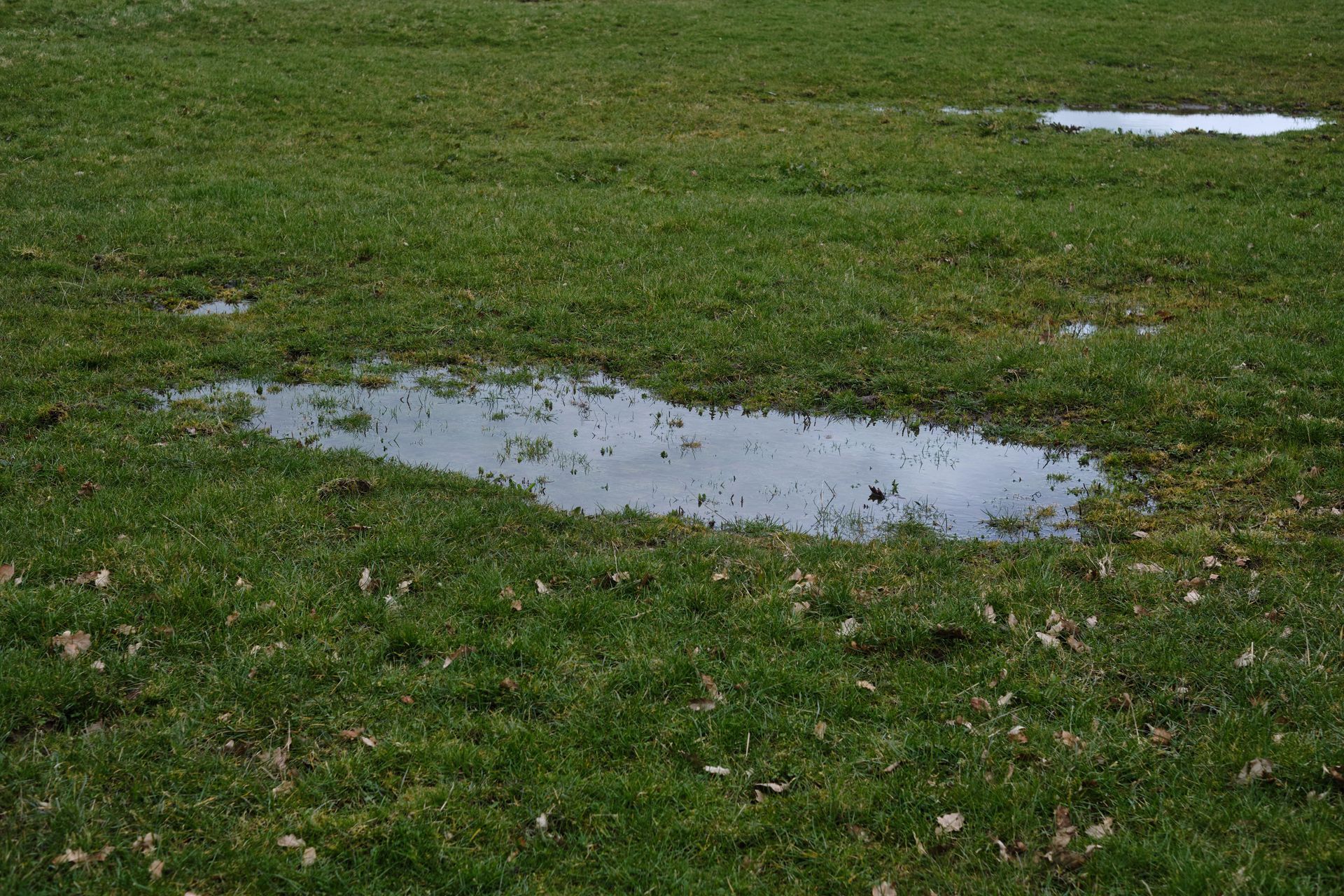
Look at the yard during or just after a steady rain. Is water flowing across the lawn from a higher area? Does it collect in one broad depression? Is the wettest area directly below a downspout? Does water move toward the foundation instead of away from it? The pattern often tells you more than the puddle itself.
Pennsylvania's Department of Environmental Protection encourages homeowners to manage stormwater runoff where possible and to check local requirements when making changes. Its Stormwater Smart guidance is a useful statewide reference. For a homeowner, the practical first step is simple: trace the water before trying to fix it.
What Yard Grading Fixes
Grading changes the shape and slope of the ground so surface water moves in a better direction. It is usually the stronger solution when the problem is built into the contours of the yard rather than coming from one isolated source.
Common signs include broad areas that stay low and muddy, water that naturally runs toward the house, uneven new-construction lots, erosion along a slope, or repeated seeding failures in the same depressed areas. Filling a few holes may only move the puddle because the surrounding grade still sends water back to the same place.
Professional yard grading and excavation in Lancaster County can reshape low areas, establish a more useful slope, prepare disturbed ground, and create a better base for lawn restoration. The goal is not simply to make the lawn look level. It is to give rainwater a predictable path away from problem areas.
What a Drainage Solution Fixes
Drainage is more appropriate when water is concentrated at a specific source or needs a defined route away from a problem area. Roof runoff is a common example. A downspout can be working correctly while still discharging water into a spot where the yard cannot handle it.
The U.S. Environmental Protection Agency explains that redirecting downspouts toward an appropriate lawn, garden, rain barrel, or other infiltration area can reduce runoff. It also cautions that water must be sent to a safe location and local requirements should be considered.
A professional downspout and yard drainage solution may be the right direction when a specific flow of water needs to be redirected or managed more effectively. The exact approach depends on the property. Drainage manages the movement of water, while grading changes the surface that water moves across.
When Your Yard Needs Both Grading and Drainage
Some of the most frustrating yards need both. A low back corner may trap rainfall and also receive concentrated runoff from a roof. Correcting only the downspout can reduce the amount of water reaching the area, but the depression may still hold rain. Regrading the depression without addressing the roof runoff can leave the reshaped area handling more water than it should.
The same can happen near a foundation. If the soil slopes toward the house and a nearby downspout adds runoff, the job is not simply to install a drain or add dirt. Both the grade and the water source should be evaluated together.
Both can manage excess water, but they solve different problems.
Yard Grading
Grading changes the shape and slope of the ground so surface water has a better path.
- Broad low areas stay wet
- Water naturally moves toward the house
- Uneven or disturbed construction lots
- Erosion or repeated seeding problems
Drainage Solutions
Drainage creates or improves a defined route for concentrated water to move safely away.
- Wet area starts near a downspout
- Roof runoff collects in one location
- A specific flow needs redirecting
- Water needs a controlled discharge path
A Quick Way to Read the Symptoms
Water Sits Across a Broad Low Area
This usually points toward a grading issue, especially when the puddle follows the visible shape of the lawn. Correcting the contour can help surface water move instead of collect.
The Wet Area Starts at a Downspout
Start with the roof runoff. Extending or rerouting the discharge may solve the main problem, although the receiving area still needs enough slope and capacity to handle the water safely.
Water Runs Toward The Foundation
Treat this as a grading and drainage assessment rather than a cosmetic lawn problem. The priority is determining why runoff is moving toward the structure and how it can be redirected appropriately.
A New-Construction Yard is Uneven and Compacted
Construction traffic and disturbed subsoil can leave a yard with poor contours and limited infiltration. Larger problems may call for grading, topsoil preparation, and reseeding. If the grade is already sound and the main issue is turf-level compaction, lawn aeration and seeding may be a more targeted option.
Why Lancaster County Yards Can Be Tricky
Lancaster County properties vary widely. Older neighborhoods may have mature landscapes, additions, patios, and drainage patterns that changed over time. Newer developments around Mount Joy, Manheim, Lititz, Elizabethtown, and Lancaster may have soil that was heavily disturbed during construction. Roofs, driveways, patios, and walkways also change how much rain reaches the lawn and where it arrives.
Soil conditions can vary from property to property, too. Clay-rich or compacted subsoil tends to accept water more slowly than loose, well-structured soil. That can make a minor contour problem more noticeable after repeated rain. It is another reason not to copy a neighbor's drainage fix without understanding your own property.
Why Patching the Wet Spot Often Fails
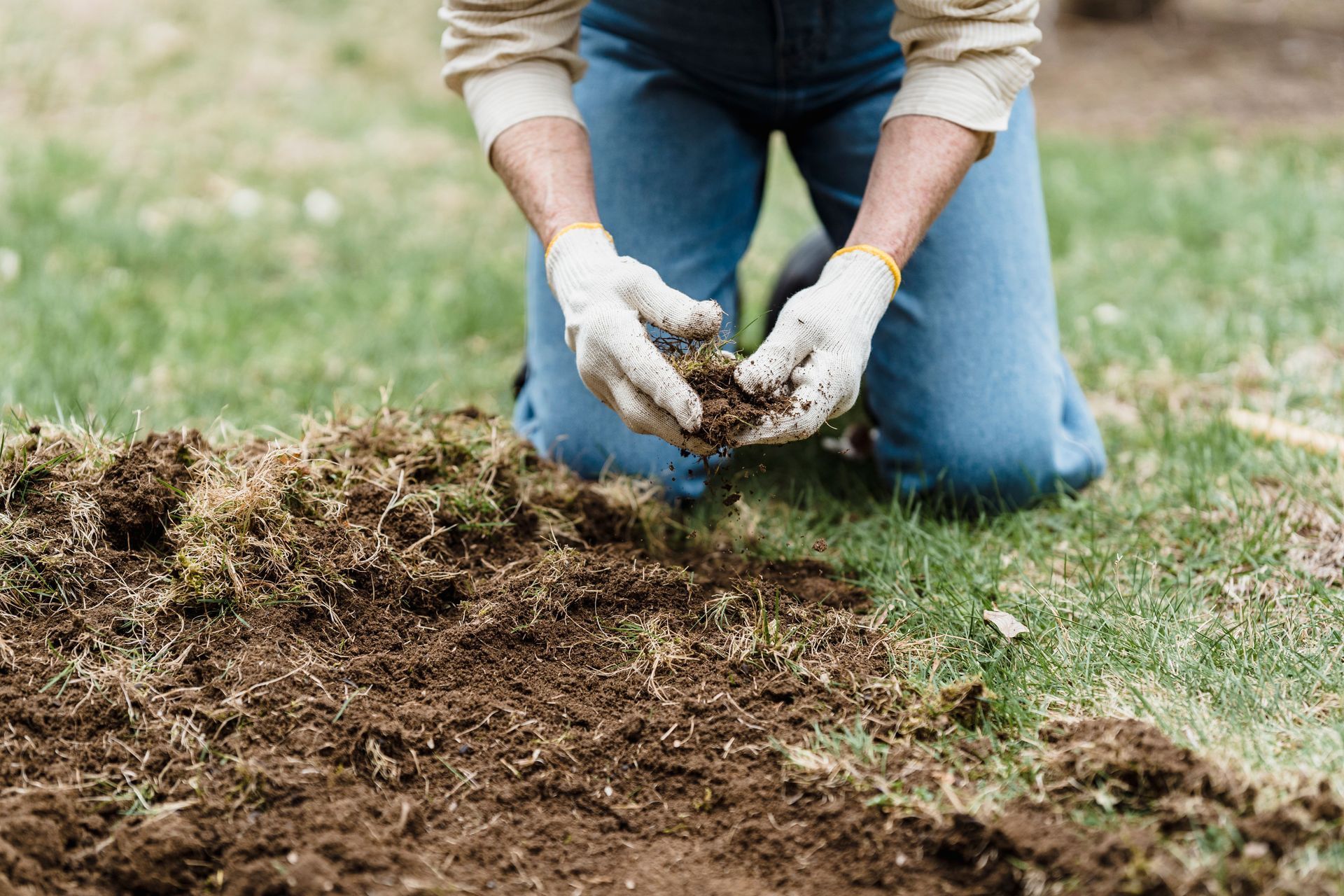
It is tempting to spread topsoil over a depression, add seed, and hope the next storm behaves differently. That can work for a very small surface irregularity, but recurring standing water is a reason to look deeper.
Adding soil without understanding the surrounding grade can simply move the puddle. Adding seed to saturated ground does not change where water travels. Installing drainage without checking the slope may treat one symptom while leaving the larger runoff pattern untouched. Even aeration cannot reverse a yard that physically pitches in the wrong direction.
A better question is not, "How do I dry this spot?" It is, "Why does water end up here every time it rains?" Once that is clear, the repair is much easier to define.
A Better Way to Diagnose Standing Water
Before choosing a repair, follow the water. The source, flow path, and stopping point help define the right solution.
Find the source
Look for roof runoff, higher ground, hard surfaces, or other areas sending water into the problem zone.
Trace the flow
Watch how water travels during or after rain. Check slopes, low points, erosion, and areas where runoff changes direction.
Choose the right fix
Decide whether the property needs grading, drainage, lawn restoration, or a combination of solutions.
What a Useful Yard Drainage Assessment Should Consider
A useful site assessment should look beyond the puddle. That includes the high and low points of the property, the direction of surface flow, downspout locations, nearby hard surfaces, signs of erosion, soil condition, and where redirected water can safely go. Neighboring properties and local stormwater rules matter, too, because one correction should not create a new problem somewhere else.
For Lancaster County homeowners, evaluating grading and drainage together helps answer the most important question: does the property need earthwork, water management, lawn repair, or a combination? That is a better starting point than paying for a solution that only addresses part of the cause.
If your yard in Lancaster, Mount Joy, Lititz, Manheim, Elizabethtown, or another Lancaster County community stays soggy after rain, the solution starts with figuring out why. Keystone Lawn Company works with both grading and drainage problems, so our recommendation is based on what your property actually needs.
Tired of reseeding the same muddy area or watching water move toward your house after every storm? We can look at the property, identify the cause, and give you a clear path forward.
Common homeowner questions
Frequently Asked Questions
Will grading fix every drainage problem?
No. Grading is effective when surface shape and slope are the main causes of pooling or unwanted runoff. If water is being concentrated by a downspout, hardscape, or another source, a drainage component may also be needed.
Can I just add topsoil to a low spot?
For a small isolated depression, minor leveling may help. For a recurring wet area, adding soil can shift water somewhere else. The surrounding elevations and flow path should be considered first.
Can aeration solve standing water?
Aeration can improve infiltration when turf-level soil compaction is the main issue. It will not correct a yard that slopes toward a house, a major low area, or concentrated roof runoff.
Can I redirect a downspout myself?
Sometimes, but the discharge location matters. Water should not be sent toward a foundation, sidewalk, neighboring property, or another area where it creates damage or a safety issue. Check applicable local requirements before making a significant change.